 Every spring, EPCOT transforms into one of the most intensively maintained landscapes in Florida during the International Flower & Garden Festival, running March 4 through June 1, 2026.
Thousands of visitors walk through and say the same thing:
“How do they keep everything looking perfect?”
It’s a fair question. The gardens face full sun, heavy foot traffic, heat, humidity, sudden cold snaps, and inconsistent rain — the same challenges home gardeners deal with, just multiplied.
Disney doesn’t succeed because they use magical plants.
They succeed because they design gardens differently.
Here are a few lessons home gardeners can borrow.
Gardens Are Designed Around Conditions, Not Preferences
One of the new exhibits this year focuses on pet-safe plants. Another highlights wildlife movement. Others feature pollinators, butterflies, and tropical plantings.
Notice the pattern: each garden has a purpose before it has a plant list.
Most home gardens start the opposite way. People choose plants first, then try to force them into the space they have.
Professional landscapes work the other direction: first sun, then soil, then water, then function, and finally plants.
When a garden struggles, it’s usually not because of care — it’s because the plant was never meant for that location.
Plants Are Grouped to Support Each Other
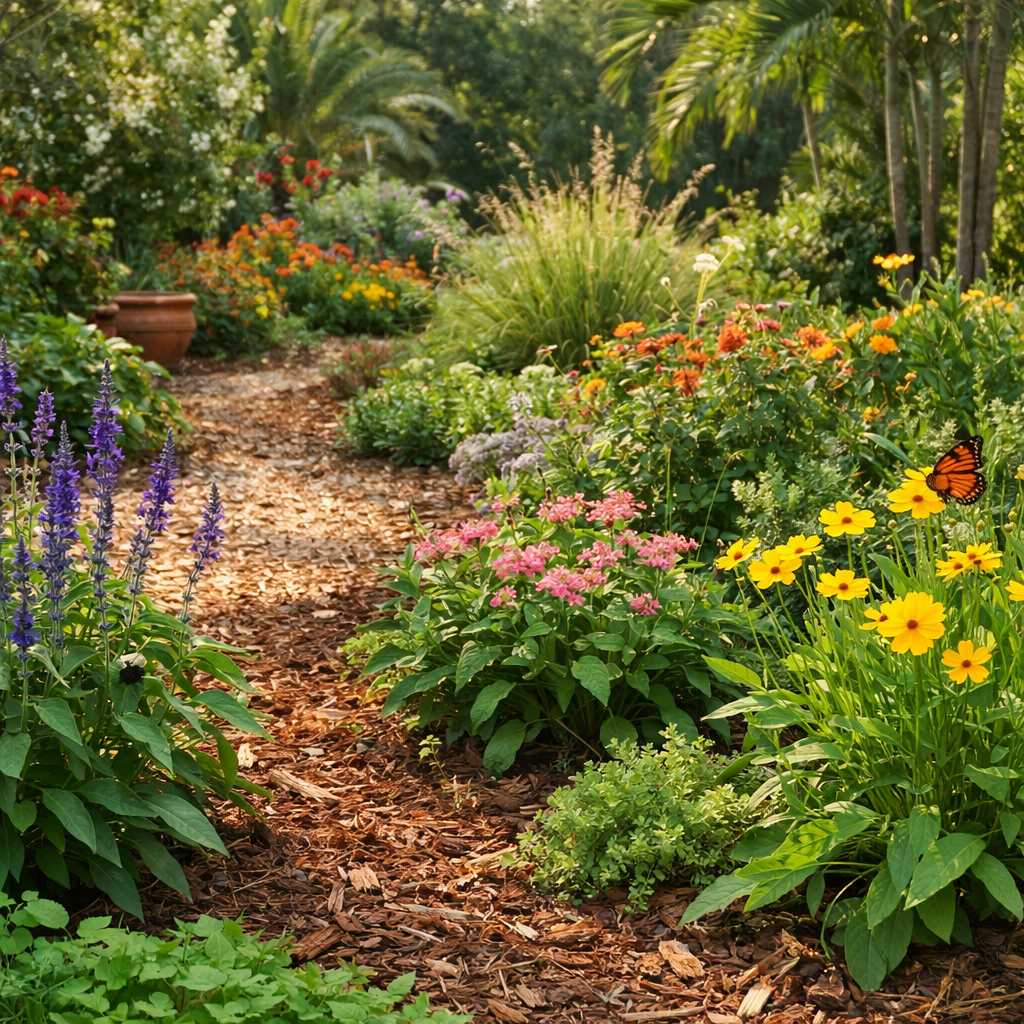
Disney rarely plants single specimens spaced apart. They plant in communities.
Dense planting shades soil, stabilizes moisture, and confuses pests. This is why festival displays still look full weeks into Florida heat.
In a home garden, wide spacing often creates the opposite effect: hot soil, stressed roots, and constant watering.
Healthy Florida gardens look slightly crowded. Struggling ones look neat.
Pollinators Are Treated as Infrastructure
The festival repeatedly highlights bees, butterflies, and wildlife crossings. This isn’t decoration — it’s maintenance.
Pollinators regulate plant health. Predatory insects regulate pests. Diversity stabilizes the system.
A garden designed only for appearance requires constant intervention. A garden designed for ecology maintains itself.
The Soil Is Always Covered
If you look closely at professional plantings, you almost never see exposed dirt. Between plants, under shrubs, and along pathways, something is always protecting the soil.
Bare soil overheats quickly in Florida and stops functioning biologically. Covered soil stays cooler, holds moisture, and recovers faster after dry weather.
Mulch isn’t a finishing touch. It’s the foundation.
Gardens Are Designed for Change
Many festival displays are temporary. Plants are swapped as conditions change. Some bloom at night. Some tolerate drought better than others.
Instead of trying to make one planting last forever, the design anticipates seasons.
Home gardens often struggle because they aim for permanence. Florida rewards adaptability instead.
What makes these plantings impressive isn’t the number of flowers — it’s how stable they remain despite weather swings. The same principles that keep a theme park display consistent are the ones that help a backyard recover after drought or require less intervention over time.
The Takeaway
Disney’s gardens aren’t successful because they’re expensive.
They’re successful because they follow ecological rules consistently: the right plant in the right place, growing with other plants, supported by living soil and natural cycles.
Those same principles work in a backyard — just on a smaller scale.
A Florida garden becomes easier the moment you stop trying to control it and start designing it to function.
If you want to understand why older gardens depended less on constant feeding and more on soil systems, I explain that idea further in What Victory Gardeners Knew That Modern Gardeners Forgot.