 If you’ve been gardening in Florida this year, you already know how unusual the weather has been.
After months of severe drought across much of the state, many gardens are struggling. Even established plants can begin to show signs of stress when soil stays dry for long periods.
Because of this, I’ve made a small but meaningful adjustment to the Florida Plant Tonic many of you already use in your gardens.
The updated tonic now includes alfalfa (Medicago sativa), an herb that offers powerful support for plants recovering from stressful growing conditions.
And while experimenting with this updated tonic, I was reminded of something gardeners have known for centuries: some of the best plant tonics are simply herbal teas.
Let’s start with the update.
Why I Added Alfalfa to the Tonic
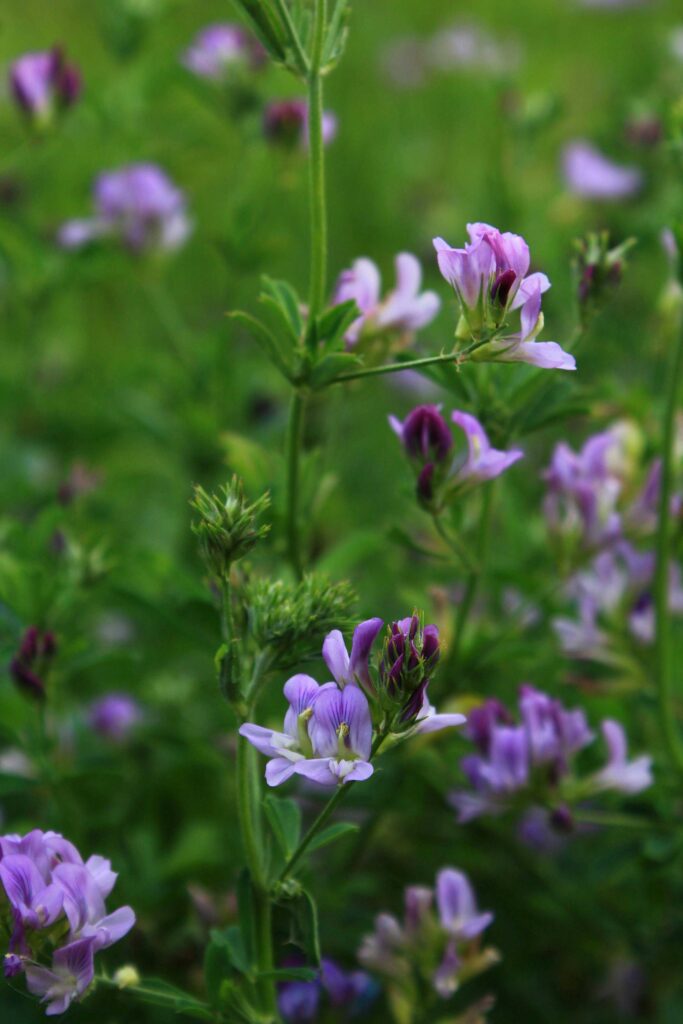
Alfalfa (Medicago sativa)
Alfalfa is widely respected among organic growers because it contains a natural plant compound called triacontanol, a powerful plant growth stimulant.
Triacontanol helps encourage stronger root development, improved nutrient uptake, increased photosynthesis, and faster recovery from environmental stress.
In drought conditions, strong roots make all the difference.
For Florida gardeners working with sandy soil and unpredictable rainfall, supporting root growth is one of the best ways to help plants bounce back when water returns.
The Florida Plant Tonic Formula
This tonic is brewed slowly using ingredients that support both soil microbes and plant health.
Each batch contains worm castings, nettle (Urtica dioica), comfrey (Symphytum officinale), alfalfa (Medicago sativa), kelp meal, unsulfured molasses, aloe vera (Aloe barbadensis Miller), and beneficial bacteria cultures.
These ingredients work together to provide minerals, natural plant compounds, and microbial food that support healthy soil biology.
Nettle and alfalfa contribute valuable plant nutrients and natural growth compounds, while comfrey is well known among gardeners as a rich source of potassium and trace minerals that support strong plant development.
Kelp provides a broad spectrum of micronutrients, and molasses feeds beneficial microbes during fermentation. Aloe supports root health and contains natural plant enzymes.
Instead of acting like a traditional fertilizer, the tonic feeds the living biology in the soil.
Healthy gardens begin below the surface, where billions of unseen microbes quietly help plants find the nutrients and resilience they need to thrive.
Healthy soil microbes help plants access nutrients, develop stronger root systems, and tolerate environmental stress much more effectively.
When the soil ecosystem is thriving, plants become dramatically more resilient.
Three Herbal Teas That Also Strengthen Gardens
While working with this tonic, I was reminded that gardeners have long used simple herbal teas to support plant health.
These are easy to make and work beautifully alongside microbial soil tonics.
Nettle Tea — the classic plant tonic

Nettle (Urtica dioica)
Nettle has been used as a garden tonic for generations.
It contains high levels of nitrogen, iron, silica, and trace minerals, which support leafy growth and stronger plant tissue.
How to make nettle tea
1 cup dried nettle leaf
1 gallon hot water
Let steep 12–24 hours, strain, and dilute with another gallon of water.
Use it on leafy crops, herbs, and plants that appear pale or weak.
Chamomile Tea — the gentle plant healer
Chamomile (Matricaria chamomilla)
Chamomile is sometimes called the plant doctor among gardeners. It contains natural antifungal compounds and soothing plant chemicals that help plants recover from stress.
Chamomile tea is especially useful for seedlings, transplant shock, and plants recovering from heat or drought stress.
How to make chamomile tea
2–3 tablespoons dried chamomile flowers
per quart of hot water
Steep 20–30 minutes, cool, strain, and water plants.
Aloe Tonic — the drought recovery helper
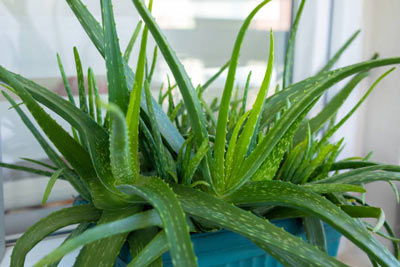
Aloe vera (Aloe barbadensis Miller)
Aloe is one of the most powerful natural plant tonics available. It contains natural compounds that stimulate root growth and help plants absorb water more efficiently. This is particularly helpful in sandy soils where water drains quickly.
Simple aloe tonic
1–2 tablespoons pure aloe gel
1 gallon water
Mix well and water plants normally.
Gardeners often use aloe when plants are newly transplanted, heat stressed, recovering from drought, or establishing new roots.
A Simple Rhythm for Florida Gardens
Many gardeners alternate between microbial tonics and herbal teas.
For example:
Week 1
Apply the probiotic plant tonic.
Week 2
Use one of the herbal teas above.
This supports both soil microbial life and plant tissue health. Together, these approaches help plants withstand Florida’s challenging cycles of heat, drought, and heavy rains.
The Real Secret: Healthy Soil
Many gardeners assume struggling plants simply need more fertilizer. But often the real issue is that the soil ecosystem isn’t thriving.
By supporting soil microbes and natural plant compounds, we create conditions where plants can grow stronger, deeper roots and better withstand environmental stress.
Sometimes the most effective garden solutions are also the simplest. And in many cases, they begin with something as humble as a handful of herbs steeped in water.
Gardener’s Tip: A Simple Way to Boost Soil Life
Over the past year, I’ve been experimenting with a living microbial brew that supports the biology of the soil.
Instead of acting like a traditional fertilizer, this tonic feeds beneficial microbes that help plants access nutrients, develop stronger roots, and recover more quickly from stress.
It’s made by fermenting natural ingredients like worm castings, kelp, nettle, alfalfa, molasses, aloe, and beneficial bacteria cultures.
I originally began making it for my own garden, but after seeing how well it supported plant health during heat and drought, I started sharing it with other Florida gardeners as well.
If you’re curious to learn more about how the tonic works — or if you’d like to try it in your own garden — you can find more details here:
https://steppingstonegc.com/product/probiotic-florida-plant-tonic/
A little goes a long way, and many gardeners like to alternate microbial tonics with herbal teas like nettle, chamomile, or aloe to support both soil biology and plant resilience.
Each batch is brewed slowly in small batches to keep the microbial cultures active and alive.