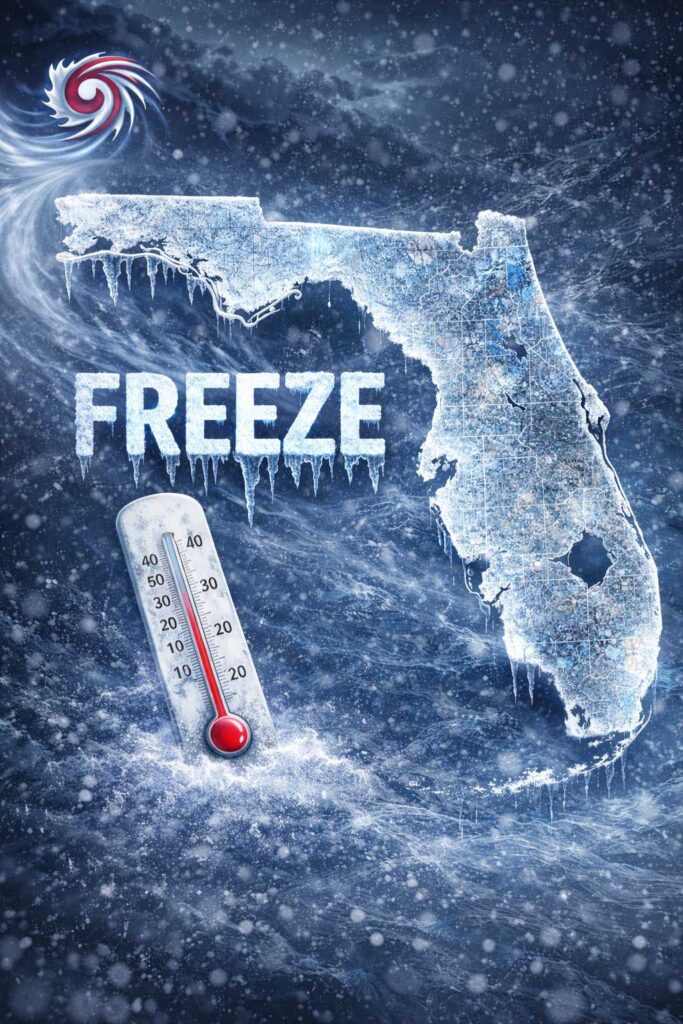
Florida has been warm — unusually warm — which is exactly why this upcoming cold snap matters.
A strong winter system is pushing frigid air deep into the South early next week.
Central Florida isn’t expecting snow, but wind chills in the 30s means overnight temps near or below freezing in many neighborhoods.
And after a warm February, plants are not prepared.
This is not a normal winter dip. This is a stress event for the garden.
What hurts plants in Florida isn’t just cold — it’s sudden cold.
Why This Freeze Is More Dangerous Than January Cold
In January, plants are dormant.
Right now they are actively growing, full of water, pushing tender new growth and metabolically awake.
Warm spells trick plants into thinking spring already arrived.
Then the temperature drops fast → plant cells rupture → leaves collapse → growth points die.
This is why freezes after warm weather cause the worst damage.
What Will Be Affected Most
Highest Risk Plants
Tender, watery growth will burn first:
Tomatoes
Peppers
Basil
Eggplant
Squash & cucumbers
Seminole pumpkin seedlings
Tropical herbs (lemongrass, Mexican tarragon)
New transplants
Recently fertilized plants
Moderate Risk
May lose foliage but survive:
Beans
Sweet potatoes
Roselle
Young papaya
Hibiscus
Perennial herbs with new growth
Usually Safe
Cool-season crops actually tolerate this well:
Kale
Collards
Broccoli
Cabbage
Carrots
Lettuce
Onion
Radish
Peas
What Actually Kills Plants (It’s Not The Cold Air)
Plants rarely die from cold air alone in Florida.
They die from radiational heat loss overnight.
Clear sky + still air = heat escapes into the atmosphere
This is why two yards on the same street can have different damage.
Your job is not to “warm the plant.”
Your job is to trap ground heat.
The 6 Most Important Actions (Do These First)
1. Water The Soil Before Sunset
Moist soil holds heat 4x better than dry soil.
Do NOT water leaves
Water the ground deeply in late afternoon
This alone can save a garden.
2. Cover To The Ground — Not Just The Plant
The cover must touch the soil.
Wrong:
Floating sheet over leaves
Correct:
Tent that traps earth warmth
Use:
Frost cloth
Old sheets
Towels
Moving blankets
Avoid plastic touching foliage.
3. Protect The Growing Tip
Plants regrow from their center.
If you only protect one part — protect the crown.
Put a cup, bucket, or box over:
• Peppers
• Tomatoes
• Eggplant
• Small transplants
4. Move Containers Against The House
Your house radiates stored heat overnight.
South or east wall is best. Under eaves is even better.
Grouped pots survive far better than isolated ones.
5. DO NOT Fertilize Right Now
Fertilizer pushes soft growth.
Soft growth freezes first.
Wait until stable warm weather returns.
6. Remove Covers In The Morning
Florida sun cooks plants quickly under covers.
Uncover after sunrise once temps rise above ~40°F.
What Not To Do
Do NOT prune freeze damage immediately
Dead leaves protect living tissue underneath
Wait 5–7 days before trimming
Many plants that look dead will regrow from the base.
After The Cold — The Recovery Plan
When temperatures rebound (they will):
-
Wait 2–3 days
-
Then water deeply
-
Then apply gentle fertilizer or compost
-
THEN prune
Pruning too early is the #1 mistake Florida gardeners make after a freeze.
The Good News
This cold will likely be brief.
But brief freezes are often the most destructive — because we don’t prepare for them.
A covered plant in Florida often survives. An uncovered plant often collapses overnight.
This event won’t end your garden.
But it will strongly reward preparation.
Quick Checklist
Before sunset the day of the freeze:
☐ Water soil deeply
☐ Cover plants to the ground
☐ Move containers to house
☐ Protect plant centers
☐ Do NOT fertilize
☐ Uncover next morning