
If you’ve lived in Florida long enough, you learn that our growing calendar doesn’t behave like the rest of the country — and neither do our favorite plants.
One of my absolute favorites is Roselle (Hibiscus sabdariffa) — a tropical hibiscus that produces glossy red calyces used for teas, jams, syrups, and festive holiday drinks. In the kitchen, it tastes like tart cranberry crossed with hibiscus and rose—bright, refreshing, and surprisingly floral.
In the garden, it’s a showstopper.
What Exactly Is Roselle?
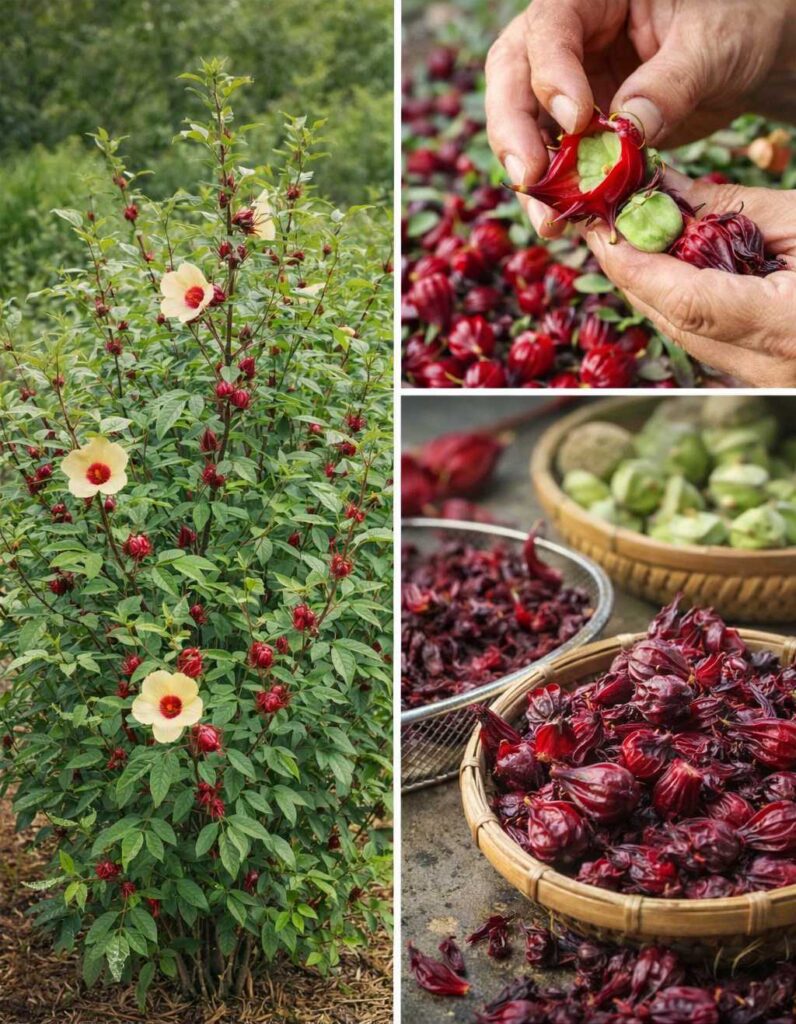
Roselle belongs to the hibiscus family, but instead of oversized ornamental flowers, gardeners grow it for its edible calyces — those ruby-red pods that form after the lemon-colored flowers fade.
Those are what you dry to make hibiscus tea. Those are what chefs use in sauces. And here in Florida, those are what folks call “Florida cranberry.”
Roselle arrived here in the late 1800s and became a staple for holiday cooking long before canned cranberry sauce made its way into southern kitchens.
Why Roselle Thrives in Florida
This plant seems almost designed for our climate: loves heat and humidity, tolerates sandy soil with mild improvement, grows from seed easily, minimal pests and drought-tolerant once established.
Once summer really kicks in, roselle grows like a shrub.
Planting & Growing Guide
If you’re in Central or South Florida:
Start from seed: March–May (direct sow or start in pots)
Germination: 7–14 days
Harvest window: Late September–December
Sun: Full sun (6+ hours)
Spacing: 3–4 ft between plants
North Florida gardeners can grow it too — you just need an early start.
Harvesting the Calyces
The magic happens after the flower drops. What remains is a red, ribbed calyx surrounding a soft green seed pod.
To process:
-
Pick when firm and glossy
-
Slice down the side
-
Pop out the seed capsule (save for next season!)
-
Dry the red calyces for tea or use fresh
Drying can be done in: a dehydrator, a low oven (lowest temperature), or simply air-dry indoors with airflow. I just toss them in a paper bag and shake daily. Once dry, they store beautifully for a year.
Roselle in the Kitchen — A Florida Iced Tea
Here’s my favorite way to use freshly harvested roselle:
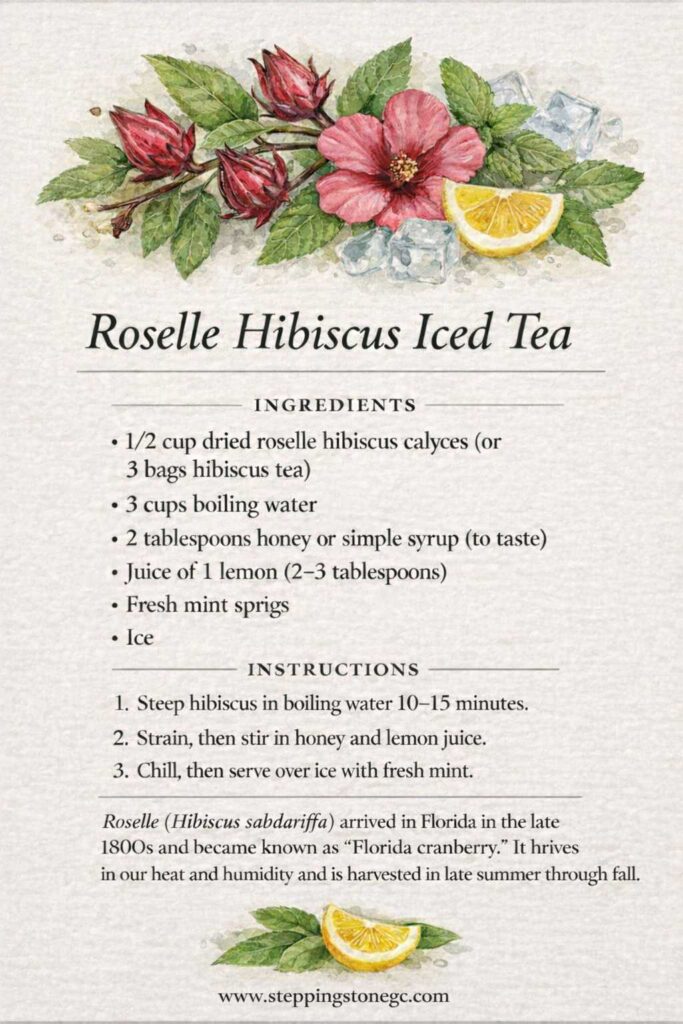
Roselle Hibiscus Iced Tea
Tart, citrusy, and floral — the perfect Florida refresher for late summer through fall.
Steep dried calyces in boiling water, add honey and lemon, chill, then pour over ice with fresh mint.
If you’re used to hibiscus tea from the store, fresh roselle tastes brighter and more aromatic. It’s one of those plants that connects the garden directly to the kitchen in the most satisfying way.
Other Delicious Uses
Roselle also makes:
Syrups for cocktails
Holiday “cranberry sauce”
Jams & preserves
Cordials
Tea blends with lemongrass, lemon balm, ginger, or mint
Photo Reference for Gardeners
To help with identification, here’s what the plant and harvest stages actually look like:
Final Thoughts
Roselle is one of the easiest ways to experience the joy of Florida’s edible garden culture — drought-tolerant, productive, beautiful, and delicious. If you’re just starting out, this plant will spoil you.
If you grow it once, you’ll grow it every year.
~ Larissa